
How to Calculate RV Utilities for Monthly Stays
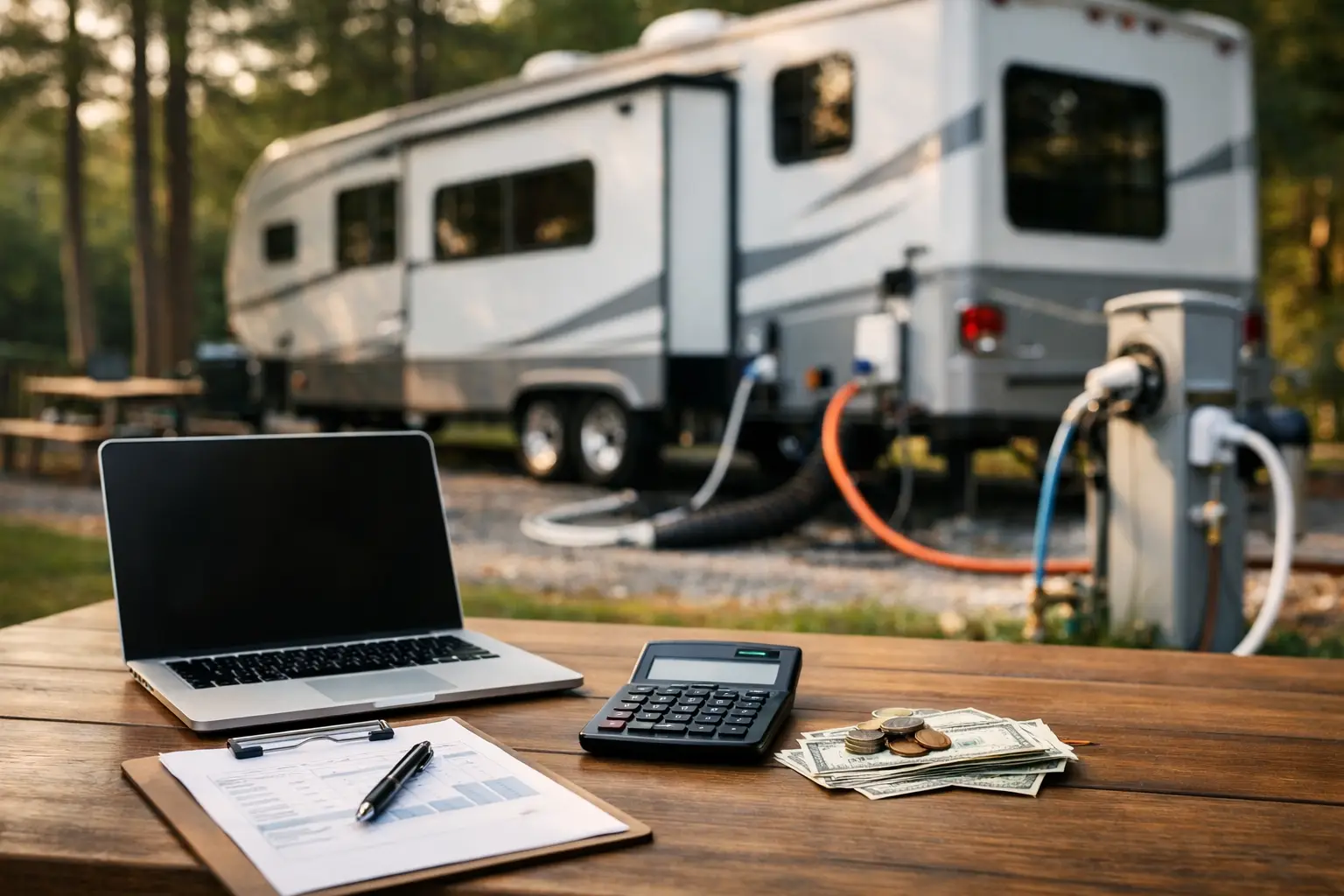
A monthly RV site can be one of the most affordable ways to stay put, but the site rent is not always the whole number. To calculate RV utilities accurately, start by separating what is included from what is billed separately. Water, sewer, trash, and Wi-Fi may be part of the monthly rate, while electricity is often metered and added based on actual use.
That setup is fair, especially for longer stays. A guest running one air conditioner all day has a very different electric bill than someone who is away at work most of the week. The key is knowing what to ask before you park, then using a simple estimate that fits your RV and your routine.
Start With the Monthly Site Terms
Before doing any math, get the site details in plain language. Ask what the monthly site fee covers and whether electricity is included, capped, or billed separately. If it is metered, ask for the electric rate per kilowatt-hour, usually written as kWh, along with any minimum charge, meter-reading fee, or deposit.
A full-hookup site generally provides water, sewer, and electric service. That does not automatically mean every utility is included in the base rent. Many extended-stay RV parks include water and sewer but charge electricity separately so each resident pays for the power they use.
It also helps to ask when the meter is read. Some parks read it on the first of each month, while others bill on the anniversary of your move-in date. If you arrive partway through a billing cycle, confirm whether the first bill will be prorated.
Write down these four numbers before you commit to a site:
- Monthly site rent
- Electricity rate per kWh
- Any fixed monthly utility fees
- Deposit or setup charges, if applicable
Once you have those details, the rest is straightforward.
The Simple Formula to Calculate RV Utilities
Your monthly utility cost is usually calculated this way:
Monthly utility total = electricity used in kWh × electric rate + fixed utility fees
Then add that total to your monthly site rent:
Total monthly RV cost = site rent + utility total + any recurring extras
Recurring extras may include pet fees, storage, extra vehicles, or a premium site charge. Do not assume those costs apply everywhere, but do ask about them. A clear monthly total makes it much easier to compare an RV site with a hotel, apartment, or short-term rental.
Here is a simple example. Say your meter shows you used 850 kWh in a month, and the park bills electricity at $0.14 per kWh.
850 × $0.14 = $119.00
If there is a $10 monthly meter fee, your utility bill would be $129.00. Add that to the monthly site rent, and you have a much more realistic number for your stay.
The electric rate and fixed fees vary by location, so treat any example as a planning tool, not a promise of what your bill will be.
How to Read an RV Electric Meter
If the park uses a meter at your site, you can check your own usage between billing dates. Take a photo of the meter when you arrive and another photo at the end of the month. Subtract the first reading from the second reading.
For example, if your move-in reading is 12,450 and the next reading is 13,180, your usage is 730 kWh. Multiply 730 by the posted electric rate to estimate the charge.
Keeping a quick note on your phone is helpful. If your bill is higher than expected, you will have your own readings to compare and can ask questions early rather than guessing.
What Uses the Most Power in an RV?
For most monthly guests, air conditioning and electric heat are the biggest factors. A rooftop AC unit may draw substantial power while it runs, especially in Georgia heat when it cycles for much of the day. Running two units, keeping the thermostat very low, or leaving doors open during busy comings and goings can raise usage quickly.
Electric space heaters can also add up. They are handy for taking the chill off a small space, but several hours of daily use over a cold month can make a noticeable difference. If your RV has a heat pump, propane furnace, or other heating option, compare comfort, fuel cost, and electric use before relying on portable heaters all season.
Your water heater matters too. An electric water heater uses less than constant AC, but long showers, frequent dishwashing, and a unit that stays on all day can increase consumption. Refrigerators, microwaves, coffee makers, televisions, laptops, and lights typically use less on their own, though they still contribute to the total.
A few common high-use items deserve a closer look:
- Rooftop air conditioners
- Electric space heaters
- Electric water heaters
- Washer and dryer units
- Portable dehumidifiers
- Residential-style refrigerators
That does not mean you need to avoid these conveniences. It simply means your bill should reflect how you use your RV, not just the size of the site.
Estimate Your Usage Before You Arrive
If you have stayed in your RV before, your past electric bills are the best starting point. Look at a summer month and a winter month, not just a mild-weather bill. Seasonal changes can be dramatic in central Georgia, where cooling needs often drive the highest electricity use.
If you do not have old bills, use a range instead of trying to guess one perfect number. A light-use guest who travels during the day and uses modest heating or cooling may use a few hundred kWh per month. A full-time resident working from the RV, running AC daily, using electric heat, or operating a washer and dryer may use much more.
For budgeting, choose a low, middle, and high estimate. Multiply each by the park’s electric rate. This gives you a realistic spread rather than an unpleasant surprise.
For instance, at an electric rate of $0.14 per kWh, 400 kWh would cost $56, 800 kWh would cost $112, and 1,400 kWh would cost $196 before any fixed fees. Your actual rate and usage may be different, but seeing the range helps you plan.
Ways to Keep RV Utility Costs Reasonable
Comfort comes first, particularly during a long stay, but a few practical habits can help control your bill. Set the thermostat to a comfortable, steady temperature instead of making big adjustments throughout the day. Use window shades, close blinds on the sunny side of the RV, and check that door seals are in good shape.
If you use a space heater, choose one with a thermostat and use it in the room you are occupying instead of heating the whole RV with several portable units. Make sure it is placed safely on a flat surface with clear space around it. Never run heaters from overloaded extension cords.
Small maintenance steps also matter. Clean AC filters, inspect your water hookup for leaks, and make sure the refrigerator is closing tightly. A clogged AC filter can make the unit work harder, while a leaking water connection can create a bigger problem than a higher bill.
If you are gone for a few days, do not leave the RV set like someone is home all day. Adjust the thermostat sensibly, while still protecting the RV from excessive heat, cold, or humidity. The right setting depends on the season, your pets, and what is inside the rig.
Ask These Questions Before a Long-Term RV Stay
A good RV park should be able to explain the billing process without making you chase answers. Before you settle in, ask whether the site has 30-amp or 50-amp service, how electricity is measured, what rate applies, and when payment is due. If you have a large fifth wheel or Class A with multiple AC units, confirm that the available service matches your rig’s needs.
Also ask what happens if you arrive after hours, need an extension on your stay, or have a utility question. For travelers looking for a quiet, practical stop near I-16, Rusty’s Retreat offers full-hookup RV sites for overnight and extended stays, with a direct-call approach that makes it easier to get the details before you arrive.
The best monthly RV budget is not the lowest estimate on paper. It is the number that covers your site, your expected electric use, and a little breathing room for a hot week, a cold snap, or more time spent relaxing at home. Get the billing details up front, keep an eye on your meter, and you can settle in with fewer surprises and more peace of mind.