
How to Choose 30 Amp RV Sites for Your Stay
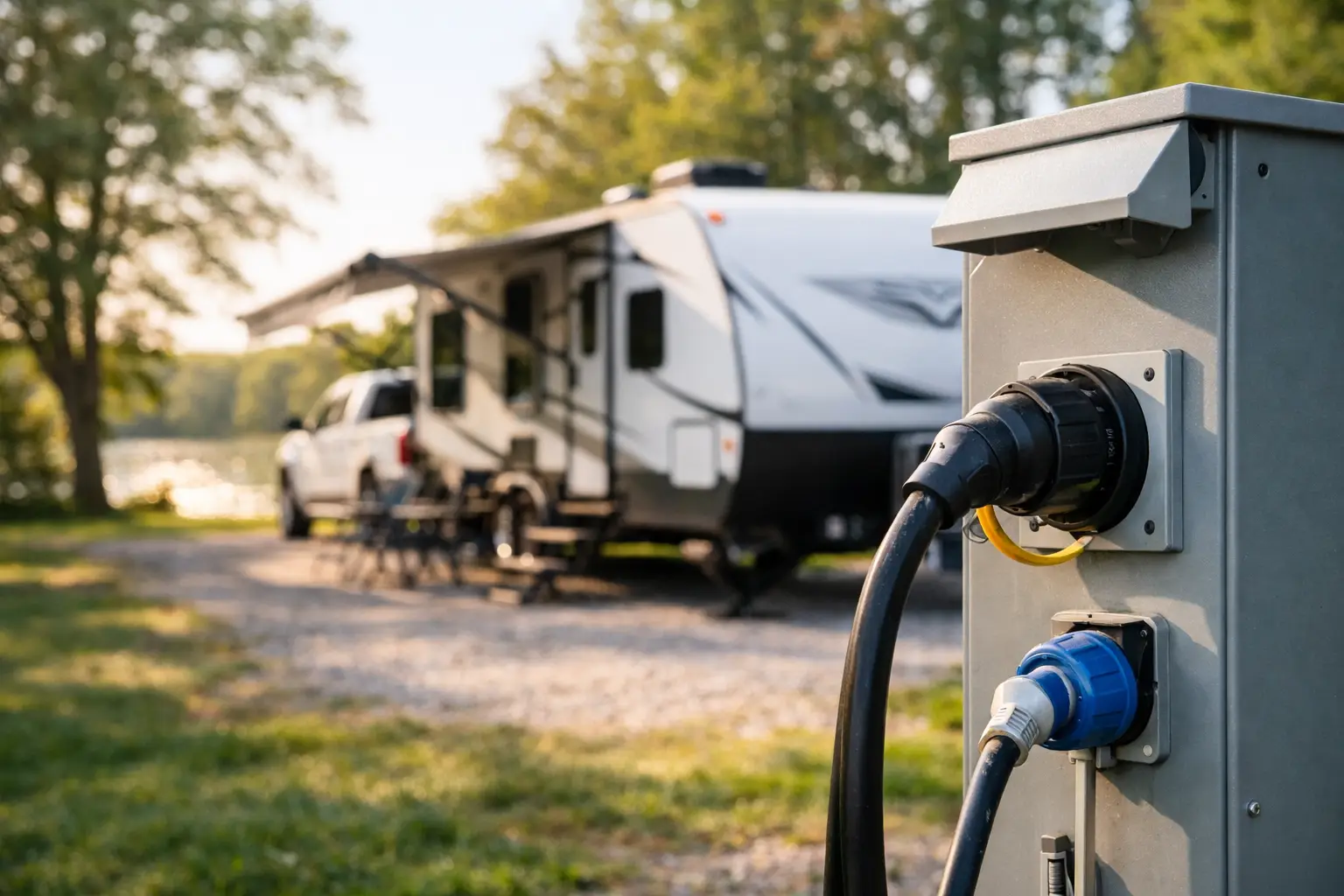
A site can look good on a reservation screen and still be a poor fit when you pull in after a long day on the road. When you choose 30 amp RV sites, the goal is simple: make sure your rig can connect safely, your basic systems can run, and you have a quiet place to settle in without a lot of guesswork.
For many travel trailers, pop-ups, smaller fifth wheels, and older motorhomes, 30-amp service is the standard setup. It can be a practical, affordable choice for an overnight stop or a longer stay, as long as you understand what that single 30-amp connection can handle. A few minutes of checking before you book can save you from tripped breakers, adapter trouble, or an uncomfortable night without air conditioning.
Start With Your RV’s Actual Electrical Setup
The number on the campground pedestal matters less than the plug on your RV. A 30-amp RV plug has three prongs and supplies up to 3,600 watts of power at 120 volts. A 50-amp RV plug has four prongs and is built for a much larger electrical load.
Do not assume a larger RV always uses 50 amps or that a smaller one always uses 30. Check the power cord that came with your camper, the label near its electrical inlet, or your owner’s manual. If you have a 30-amp rig, a 30-amp site gives you the direct connection you want, with no adapter required.
A 30-amp camper can usually use an adapter at a 50-amp pedestal, but it will still be limited to the power available through its 30-amp cord and breaker. The adapter does not give your RV extra capacity. It only lets the plugs connect. For a simple stop, direct 30-amp service is often the cleanest setup.
What a 30-Amp RV Site Can Run
Thirty amps are enough for the normal essentials in many RVs. You can generally run the refrigerator, lights, water pump, battery charger, television, and one air conditioner. The catch is that high-draw appliances add up fast.
Your air conditioner may use most of the available power when it starts. If you turn on the microwave, electric water heater, coffee maker, hair dryer, or portable heater at the same time, you may overload the circuit. That does not mean the site is inadequate. It means the RV’s power use needs to be managed like it would at any 30-amp campground.
For an overnight stay, this is usually easy. Let the air conditioner cycle, then use the microwave or coffee maker for a few minutes. If you are staying for several weeks, it helps to build a routine around the bigger appliances. Many long-term 30-amp guests use propane for water heating or cooking when available, especially during hot Georgia weather when the air conditioner is working hardest.
Choose 30 Amp RV Sites With Full Hookups
Electric service is only one part of a comfortable RV stop. If you need to stay connected and avoid moving your rig to dump tanks, look for full hookups: electricity, water, and sewer at the site.
Water hookup means you can use your sinks, shower, and toilet from your RV’s fresh-water supply line rather than relying only on the onboard tank. A sewer connection gives you a direct place to connect your waste hose. That is especially helpful for extended stays, families, pet owners, and travelers who would rather not spend part of their trip searching for a dump station.
Ask whether the site’s 30-amp electric, water, and sewer are all at the pad. A campground may offer those amenities somewhere on the property without having every service at every site. Getting a clear answer before arrival keeps setup fast, particularly if you are arriving near dark.
Check the Site Fit Before You Pull In
A 30-amp hookup does not tell you whether your RV will physically fit. Before booking, have your total rig length ready, including a tow vehicle if it needs to remain with you. Let the property know whether you are in a motorhome, travel trailer, fifth wheel, pop-up, or camper van.
It also helps to ask about pull-through versus back-in access. A pull-through site can make a one-night highway stop easier because you do not have to unhook or maneuver as much. A back-in site may be perfectly comfortable for a longer stay, but it can take a little more time to get positioned.
Look at the ground conditions, too. A level or mostly level pad makes a difference when you want your refrigerator to operate properly and your doors to close as they should. Gravel sites are common and practical, but you may want leveling blocks, wheel chocks, and pads for your stabilizers. Keep those items where you can reach them without unloading half the RV.
Think About Your Arrival Time and Location
After several hours on I-16, convenience matters. A park close to an exit can shorten the final stretch of the day, but it should still feel like a place where you can park, walk the dog, and rest. The best roadside RV stop is not always the biggest one. It is the one that gives you dependable hookups, clear directions, and a straightforward arrival.
If you expect to arrive late, call ahead. Confirm the site number, check-in instructions, and whether the pedestal is easy to find in the dark. Ask whether you need a gate code or if someone will meet you. Direct communication is especially useful when traveling during storms, holiday traffic, or a last-minute change of plans.
At Rusty’s Retreat in Dublin, Georgia, travelers can find full-hookup RV sites less than a mile from I-16 Exit 51, along with a quieter setting than a crowded hotel parking lot. Calling ahead lets the team help match your stay to the site and service you need.
Inspect the Pedestal Before Plugging In
Once you are parked, take a close look at the electric pedestal before connecting. You are looking for a 30-amp receptacle that is intact, dry, and not loose or damaged. Make sure the breaker is switched off before you plug in your shore-power cord, then turn it on after the connection is secure.
A basic RV surge protector or electrical management system is a worthwhile piece of gear. It can alert you to wiring problems, low voltage, high voltage, or an open ground before power reaches your RV. This is not about expecting trouble at every park. It is about protecting the appliances and electronics you depend on.
If the breaker trips, do not keep resetting it without checking your power load. Turn off the air conditioner, microwave, water heater, and other high-draw items first. If the issue continues with most appliances off, contact the office. A dependable campground wants to know when a pedestal needs attention.
Consider Weather, Pets, and Daily Comfort
In summer, air conditioning is the biggest reason many travelers care about electrical capacity. A 30-amp site can support one AC unit, but it asks you to be thoughtful about the rest of your power use. Keep blinds closed during the hottest part of the day, use the awning if conditions allow, and avoid running heat-producing appliances at the same time as the AC.
For pet owners, a full-hookup site with dependable power offers more than convenience. It helps keep the RV comfortable while you take a short walk, shower, or handle a nearby errand. Never leave a pet in an RV during extreme heat unless you are confident in your cooling setup and have a plan for a power interruption.
For monthly stays, ask how electricity is handled. Some parks include it in the site rate, while others bill usage separately. Neither approach is automatically better. Separate metering can be fair when you use more power during hot or cold months, while an included rate can make budgeting simpler. The key is knowing the arrangement before you settle in.
A Quick Call Can Make the Choice Easier
The most useful booking question is not just, “Do you have 30 amps?” Ask whether the available site has 30-amp electric, water, sewer, enough room for your rig, and access that fits your arrival plans. Mention your length, number of slide-outs, pets, and whether you are staying one night or longer.
A good RV stop should not leave you guessing about the basics. Get the right connection, park with room to breathe, and give yourself a comfortable place to stop, stay, and unwind before the next stretch of road.