
Hotel Room Versus Private Cabin: Which Fits?
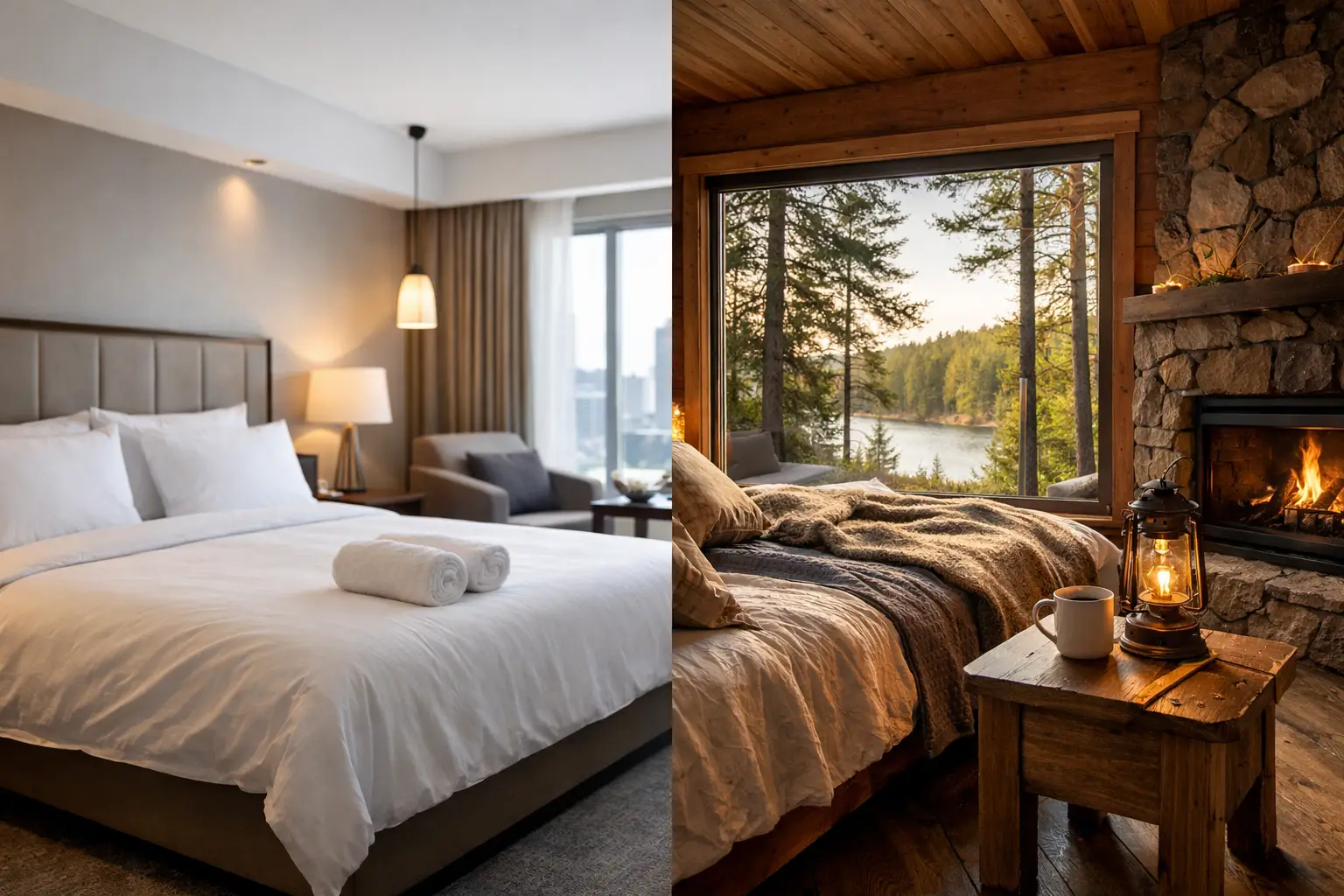
A long day on I-16 changes what “a place to sleep” really means. When you are tired, unloading kids, walking the dog, or getting ready for another early start, the hotel room versus private cabin choice comes down to more than a bed and a nightly rate. It is about how easily you can pull in, settle down, and get real rest.
Both options have their place. A standard hotel room can be the quickest answer for a short stop. A private cabin can give travelers more room, more quiet, and a little more breathing room after hours on the road. The better choice depends on who is traveling, how long you are staying, and what will make the stop feel simple.
Hotel Room Versus Private Cabin: Start With Your Trip
If you are traveling alone for one night, arriving late, and leaving before sunrise, a basic hotel room may cover the essentials. It is familiar. You know the usual setup: a bed, bathroom, TV, and a compact place to put your bag.
But a cabin often makes more sense when the stop needs to do more than get you through the night. Families may want space so everyone is not trying to get ready in one tight room. Couples may appreciate not hearing doors close and carts roll down a hallway. Pet owners may prefer stepping directly outside rather than taking an elevator or walking through a lobby for every bathroom break.
For travelers coming off the interstate, convenience is not just about being close to the exit. It is also about what happens after you arrive. Ground-floor lodging, simple parking, and a private entrance can save time when you are carrying coolers, work gear, groceries, or sleepy children.
A Hotel Room Works Well When Speed Is the Priority
A hotel room is often a practical fit for a single overnight traveler with light luggage. You may not need a kitchen, extra sitting space, or a separate entrance. If you are comfortable with shared corridors, parking lots, and the usual hotel activity, it can be a straightforward choice.
The trade-off is that the room is usually one part of a larger building. Your experience can depend on who is staying next door, what is happening in the hallway, and how far you need to walk from your vehicle. This does not make hotels a bad option. It just matters more when you are worn out and want a quieter stop.
A Private Cabin Fits When Comfort Carries More Weight
A private cabin gives you a defined space that feels less like a room assignment and more like your own stop for the night. Instead of a door opening onto a shared indoor corridor, you can often park nearby, walk in, and close the door on the day.
That setup is especially helpful for road-tripping families, travelers with pets, and people staying several nights. A cabin can offer practical extras such as a refrigerator and microwave, along with the breathing room that makes takeout, snacks, and a quiet evening easier. Selected cabin-style units may include a full kitchen and dishwasher, which can make a longer stay much more manageable.
Privacy Is More Than a Nice Extra
Privacy is one of the clearest differences between a hotel room and a cabin. At a hotel, privacy is limited to the space inside your room. Outside the door, you may have a hallway, stairwell, lobby, pool traffic, or guests passing by at all hours.
A private cabin creates more separation from the next guest. You are less likely to have people walking directly past your door on their way to another room. For some travelers, that means better sleep. For others, it simply means the dog settles faster, the kids can get to bed without distraction, or a phone call can happen without worrying about thin walls and nearby foot traffic.
Still, privacy is not the only deciding factor. Someone who wants to be near a large hotel’s breakfast area, business center, or other on-site services may find the traditional setup useful. The right question is not whether one type of lodging is always better. It is whether you want your stop to feel busy and shared or quiet and self-contained.
Think About Access Before You Book
Stairs can be easy to overlook when making a reservation from the road. They are harder to overlook after a long drive, especially with luggage, a pet carrier, mobility concerns, or a child asleep on your shoulder.
Ground-floor accommodations make arrival easier. You can park, unload, and get inside without hunting for an elevator or carrying bags up a stairwell. This also helps when you need to head out early. There is less to coordinate and fewer steps between your door and the road.
At Rusty’s Retreat, the lodging is designed around no-stairs access, which is a practical advantage rather than a fancy feature. For travelers who need a quick, easy stop near I-16 Exit 51, that kind of access can make the entire evening go smoother.
Pets Change the Hotel Room Versus Private Cabin Decision
Traveling with a pet adds a few questions that do not always show up in a nightly rate. Is the property pet-friendly? How far is the walk outside? Will your pet be comfortable with unfamiliar hallway noise? Can you get in and out without making the trip feel like a chore?
A pet-friendly private cabin can take some of that pressure off. A direct entrance means less passing through shared spaces, and a quieter setting may be easier on anxious dogs. It also gives owners a little more privacy when dealing with food bowls, leashes, crates, and the regular stops pets need after a day in the vehicle.
Before booking any lodging, ask about pet rules and fees. Being clear upfront avoids surprises at check-in and helps make sure the room or cabin is the right fit for both you and your animal.
Room to Stay, Not Just Sleep
For a one-night stop, a bed, shower, television, refrigerator, and microwave may be all you need. Those basics matter because they keep travel simple: store a few drinks, heat up dinner, shower off the road, and relax before bed.
For a longer stay, space and kitchen access become more valuable. Eating every meal out gets expensive quickly, and a small refrigerator can only do so much for a family, a mobile worker, or someone working in the area for several days. A cabin with a fuller kitchen setup gives you more control over meals and routines.
This is where value should be measured by more than the advertised nightly price. A lower-priced hotel room may look like the cheapest option at first. But if it means buying every meal, paying extra for pets, or feeling cramped for several days, a cabin may be the better value for your actual trip.
Ask These Questions Before You Pull Off the Highway
When comparing lodging, it helps to keep the decision practical. Consider how many people are staying, whether you have pets, how much gear you are bringing, and whether you will need food storage or cooking space. Then think about your arrival time. If you are getting in late, simple parking and a direct path to your door can matter a lot.
Also consider the purpose of the stop. A fast overnight break and a week of work travel do not need the same kind of lodging. Neither do a solo driver and a family with a dog. Matching the unit to the trip is usually the easiest way to avoid paying for things you will not use or missing the things you will wish you had.
A restful stop does not have to be complicated. Choose the place that lets you park, get comfortable, and leave the road behind for a while. Whether that is a hotel room or a private cabin, the best choice is the one that makes tomorrow’s drive feel easier.