
Motel Versus Cabins: Which Stay Fits Your Trip?
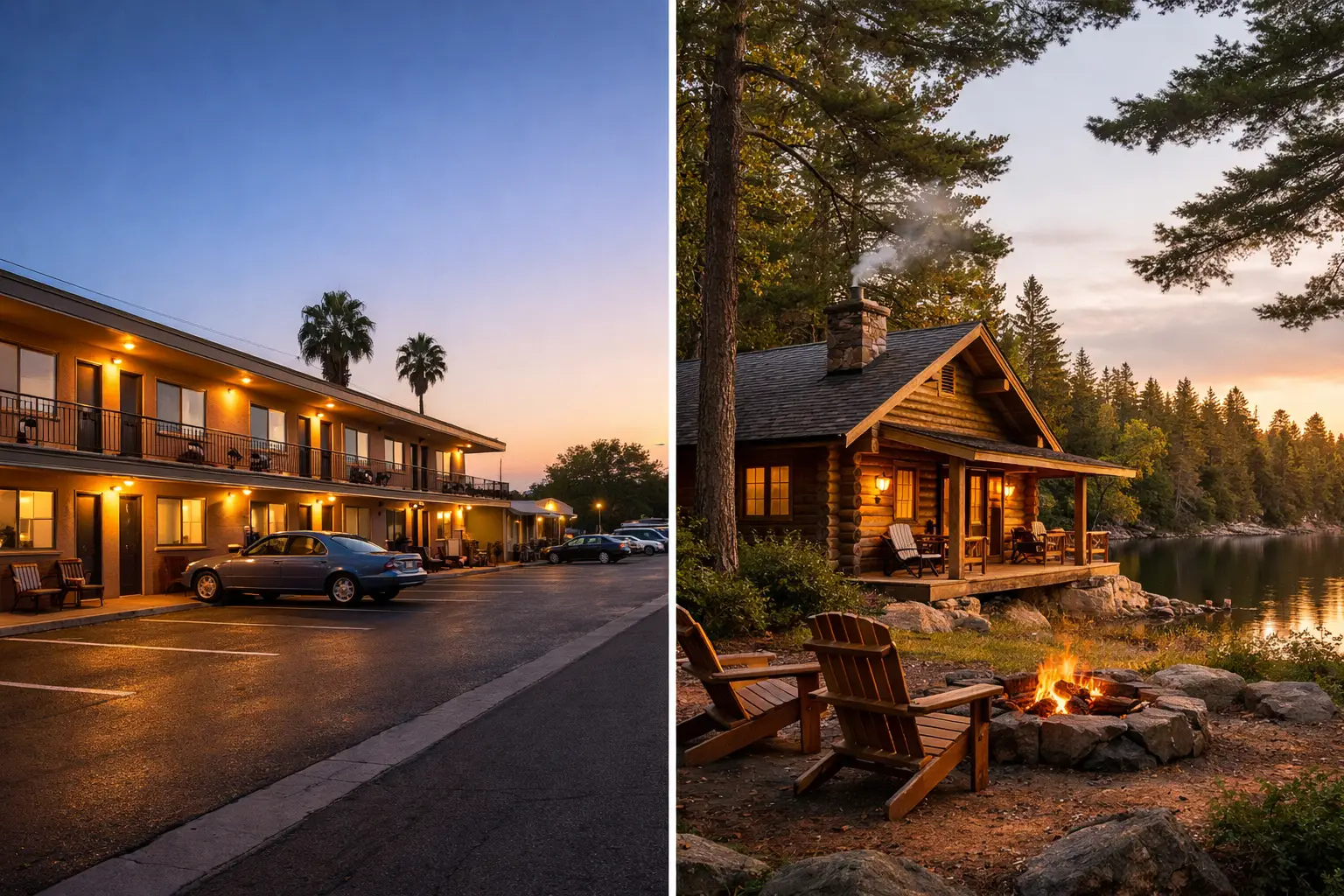
After a long stretch on I-16, the motel versus cabins question usually comes down to one thing: what will help you rest best before you get back on the road? A standard motel room can be quick and familiar. A cabin can give you more breathing room, a quieter door to close, and a stay that feels less like a stop in a crowded parking lot.
Neither choice is right for every traveler. If you are pulling in late, leaving early, and only need a clean place to sleep, a motel may do the job. If you are traveling with a pet, kids, extra gear, or plans to stay a few days, a ground-floor cabin may be worth a closer look.
Motel Versus Cabins: Start With the Kind of Trip You Have
The best lodging choice is not always the cheapest nightly rate on a screen. It is the place that works for the people, pets, vehicle, and schedule you have with you.
A motel is often built for a simple overnight. You park nearby, check in, carry in a bag, shower, sleep, and head out. That convenience matters when you have been driving all day or need to be back on the highway before sunrise. Many travelers like knowing exactly what to expect from a motel room: a bed, bathroom, television, and a straightforward place to recharge.
Cabins are often a better fit when a standard room feels tight or exposed. Instead of a long indoor hallway and neighbors on both sides, you may have your own exterior entrance and more of a home-style layout. For travelers who value privacy, that can make a big difference. You can bring in groceries, settle a pet, spread out luggage, and relax without feeling like you need to keep everything packed for the morning.
For a quick overnight, either can work well. For a multi-night stop, a work stay, or a family trip, the extra room and practical features of a cabin often start to matter more.
Privacy and Noise Can Change the Whole Stay
Roadside lodging should be easy, but it should also give you a fair chance to sleep. Motels can be busy places, especially near major exits. Depending on the property and the night, you may hear car doors, hallway traffic, guests above you, or early morning departures.
A cabin-style stay can offer a calmer setup. Having a separate unit and direct outdoor access gives many guests a greater sense of personal space. It is a useful option for light sleepers, couples who want a quieter stop, and families trying to get children settled after a long ride.
That does not mean every cabin is completely isolated or every motel is noisy. The property itself matters. Look for a lodging spot that is close enough to the interstate for an easy arrival but set back enough to feel restful once you park. A quiet retreat-style setting is especially welcome when the highway has been loud all day.
Ground-floor access matters here, too. Carrying bags, pet supplies, coolers, or work equipment up stairs is nobody’s favorite end to a drive. A no-stairs unit makes getting in and out simpler, particularly for older travelers, families with small children, or anyone managing a sore back after miles behind the wheel.
Space and Amenities: Think Beyond the Bed
A motel room typically covers the basics well for a short stay. A bed, shower, refrigerator, microwave, and television can be all you need. For one person or a couple passing through, that setup may be practical and affordable.
Cabins can offer the same essentials with a little more flexibility. The difference becomes clear when you have several people sharing the space, want to avoid eating every meal out, or need room to work. A larger refrigerator and microwave make simple travel meals easier. In selected cabin units, a full kitchen and dishwasher can make a longer stay far more comfortable.
That kitchen is not a luxury detail for everyone. It can be a real budget tool. A family can make breakfast before leaving town, heat up leftovers after arriving late, or keep snacks and drinks on hand without repeated convenience-store stops. Mobile workers can settle in with coffee and a simple meal instead of hunting for a restaurant after a full day.
Before booking, ask what is actually in the specific unit. Cabin amenities can vary. Confirm the number of beds, guest capacity, kitchen setup, pet policy, and whether the room has the features your group needs. Straight answers before arrival prevent surprises at check-in.
Price Is More Than the Nightly Rate
When comparing motel versus cabins, the sticker price is only one part of the cost. A low nightly rate may look good at first, but the value changes if the room is too small for your group, does not work for your pet, or leaves you buying every meal away from the room.
A cabin may cost more or less than a typical motel depending on the size, amenities, dates, and local demand. The better question is what you receive for the rate. A unit with more beds, a kitchen, a refrigerator, and a little extra privacy can be a better value for a family or a longer stay than booking multiple motel rooms.
Travelers staying more than a few nights should also ask about extended-stay options. Weekly or longer arrangements may be more sensible than paying a standard nightly rate over and over. If you are working in the Dublin area, waiting on a home repair, visiting family, or taking a slower trip through Georgia, comfort over several days deserves some weight in the decision.
Direct booking can help here. Calling the property lets you explain how many people are traveling, whether you have a pet, when you expect to arrive, and how long you may stay. It is often the fastest way to find out which available unit makes sense instead of trying to sort through room labels on a booking page.
Pets, Parking, and Easy Arrivals
Pet owners know that a room can look fine online and still be a poor fit once the dog needs a walk. An exterior-entry cabin or ground-floor unit makes those late-night and early-morning trips easier. It also gives you a little more separation from other guests than a busy interior corridor.
Always confirm pet fees, size or breed rules, and how many pets are allowed before you travel. Bringing a pet should not turn a simple overnight into a last-minute search for another place to stay.
Parking is another practical point. If you are towing a trailer, driving a work truck, traveling in a larger vehicle, or simply carrying a lot of gear, ask where you can park and how close it is to your unit. Roadside lodging should reduce hassle, not create a difficult unloading situation after dark.
For RV travelers, the comparison is a little different. A full-hookup RV site can be the best choice when you want to stay in your own rig while having water, sewer, and 30/50-amp electric service. For travelers without an RV, a cabin gives some of that same independent, pull-in-and-settle-down feeling without needing to tow anything.
When a Motel Is the Better Choice
A motel still makes sense for plenty of trips. Choose one when you need the most basic overnight arrangement, are traveling alone with minimal luggage, or know you will only be in the room for a few hours. It can also be the better option when location is your only priority and you want to be as close as possible to a particular exit, restaurant, or fuel stop.
There is no need to pay for more room or kitchen features if you will not use them. The right stay is the one that keeps the trip moving without stretching the budget.
When a Cabin Is Worth It
A cabin is usually worth considering when privacy, convenience, and a calmer setup matter as much as the bed itself. It is a strong choice for families, couples, pet owners, workers on temporary assignments, and travelers staying more than one night. It can also be a welcome change for anyone tired of stairs, crowded corridors, and the feeling of being stacked into a standard room.
At Rusty’s Retreat in Dublin, Georgia, travelers can find ground-floor cabins, tiny homes, duplex units, and RV sites less than a mile from I-16 Exit 51. The focus is simple: get off the road, get settled fast, and have the basics you need for a comfortable stop.
Before you book, think about how you want to feel when the door closes. If a simple bed near the highway is all you need, a motel can be a good call. If you would rather have more room to settle in, an easier setup for your pet or family, and a quieter place to unwind, a cabin may make tomorrow’s miles feel a little easier.