
12 Tiny Home Storage Ideas That Work Hard
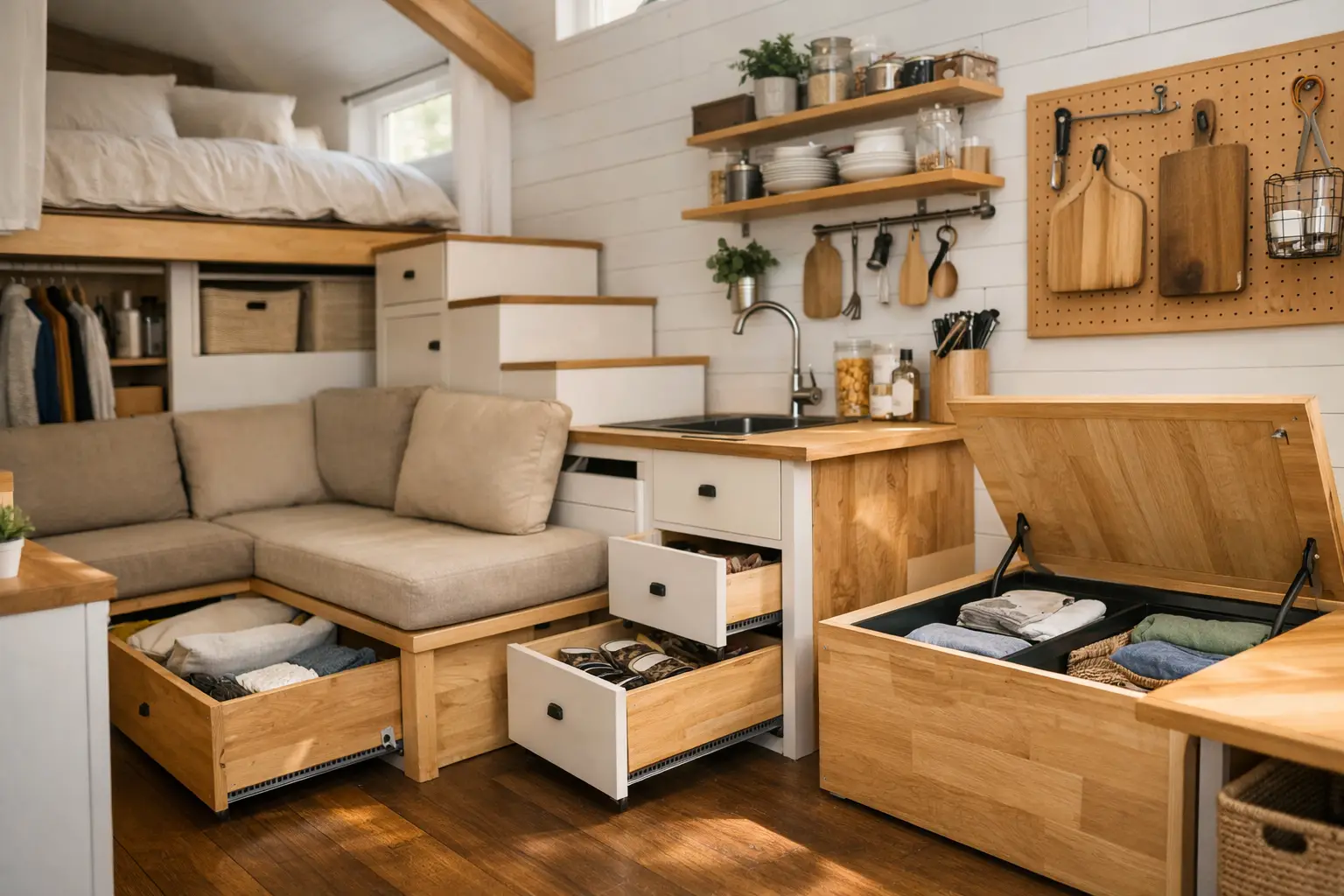
A tiny home can feel peaceful and easy to manage – until bags land on the floor, kitchen supplies take over the counter, and there is nowhere to put the dog leash. The best tiny home storage ideas are not about cramming more stuff into every corner. They are about giving everyday items a clear place, so the room stays useful, comfortable, and ready for the next stop or the next guest.
For highway travelers, weekend guests, and people considering compact living, storage needs to work without making a small space feel closed in. A good setup should be simple enough to use on a tired travel day and flexible enough for a longer stay.
Start With What You Actually Use
Before buying bins, shelves, or organizers, take stock of what needs to live in the tiny home. Bedding, towels, toiletries, cookware, groceries, work gear, pet supplies, and seasonal clothing all need different kinds of access.
Keep daily-use items within easy reach. Things used once a week or less can go higher, lower, or farther back. This one decision prevents a common small-space problem: storing frequently used items in places that are inconvenient enough to leave counters and chairs cluttered.
It also helps to set a limit. If a cabinet is full, adding another organizer may not be the answer. You may need fewer duplicate utensils, fewer oversized containers, or a smaller supply of items that are easy to replace on the road.
Tiny Home Storage Ideas for Every Room
Use the Space Under the Bed
A bed is one of the largest pieces of furniture in a tiny home, so it should do more than provide a good night’s sleep. Raised bed frames, built-in drawers, or lidded containers can hold extra linens, off-season clothing, shoes, and bulky items like blankets.
Choose containers that slide out easily and have lids. Open baskets look nice, but they can collect dust and make it harder to find what you need. For a home that may move or sit near a busy travel route, secure storage is the practical choice.
If the bed has a lift-up platform, leave enough open space around it to raise it comfortably. The biggest storage compartment is not much help if it takes too much effort to reach.
Put Walls to Work
Floor space is limited, but walls often have room to spare. Hooks near the door can hold jackets, keys, hats, and pet leashes. A slim rail in the kitchen can keep cooking tools off the counter. In the bathroom, wall-mounted baskets or a narrow medicine cabinet can store toiletries without crowding the sink.
Use sturdy mounting hardware and avoid overloading one wall. Small homes need storage that is secure as well as convenient, especially if the unit is transported or used as a travel cabin.
Vertical storage works best when it stays tidy. A row of matching hooks or a single narrow shelf usually looks calmer than several different organizers competing for attention.
Choose Furniture With a Second Job
In a compact space, every large piece should earn its footprint. A bench with storage inside can hold shoes or extra bedding. A coffee table with a shelf or drawer can keep remotes, chargers, and games together. An ottoman can provide a place to sit, rest your feet, and store a throw blanket.
For longer stays, a small drop-leaf table is especially useful. It can serve as a work surface or dining table when open, then fold down when you need clear walking space. The trade-off is that folding furniture can feel less solid than a permanent table, so choose hardware that is easy to operate and built for regular use.
Make Kitchen Cabinets Easier to Use
Tiny-home kitchens can be fully capable, but they do not have room for every gadget. Start with cookware that nests together and stackable food containers with matching lids. Store the items used most often at the front of cabinets, and keep occasional-use pans or serving dishes higher up.
A shelf riser can separate plates from bowls. A narrow pullout bin can gather snacks, coffee supplies, or cleaning products. Inside a lower cabinet, a simple bin keeps dish soap, sponges, and trash bags from rolling around.
Do not overlook the refrigerator. Clear containers can group breakfast foods, drinks, or grab-and-go snacks. Labeling is helpful for families and shared accommodations, but keep labels simple so they do not become another chore.
Turn Awkward Corners Into Useful Storage
Small homes often have narrow spots beside the refrigerator, around the bathroom door, or under stairs in loft-style layouts. These spaces may not fit standard furniture, but they can hold slim shelving, a rolling cart, or custom cubbies.
Measure before buying anything. A cart that is even an inch too wide can become a daily annoyance. Also consider whether doors, drawers, and walkways still have room to open. Clear paths matter more in a tiny home than in a larger house.
Keep the Entry From Becoming a Pile-Up
The entryway sets the tone for the whole space. If shoes, bags, and coats have no home when someone walks in, they end up wherever there is an open patch of floor.
A low shoe tray, a few wall hooks, and one small basket for keys or sunglasses may be all you need. For wet or muddy conditions, use a washable mat and a tray that keeps dirt and water contained. This is a small detail that makes a cabin or tiny home feel easier to settle into after a long drive.
Create a Real Bathroom System
Bathrooms can get crowded fast because bottles and towels are bulky. Use the back of the door for a hook rack, place a narrow shelf above the toilet if there is room, and keep only current-use products near the sink.
Rolled towels fit neatly in a basket or shelf and are easy for guests to grab. Extra toilet paper and cleaning supplies can go in a closed cabinet or under-sink bin. Closed storage is worth considering here because it keeps the room looking cleaner and protects supplies from moisture.
Use Open Shelves Carefully
Open shelves can make a tiny home feel more open, but they can also make it look busy. They work best for items that are both useful and visually simple, such as neatly folded towels, a few mugs, or matching food canisters.
If you tend to collect mismatched items, closed cabinets may be the better choice. Another option is a shelf with small bins or baskets, which gives the airy look of open storage while hiding loose odds and ends.
Give Work Gear a Closing Time
Mobile workers often need a place for a laptop, cords, paperwork, and chargers. Without a plan, work equipment can take over the bed or kitchen table.
Use one portable work tote, a charging drawer, or a small cabinet that closes at the end of the day. Keeping work gear together makes packing easier and helps the tiny home feel like a place to rest once the work is done.
Store Pet Supplies Near the Door
Pet-friendly spaces need a simple routine. Keep food, treats, waste bags, a towel, and a leash in one dedicated basket or cabinet near the entry. A sealed food container helps prevent odors and keeps kibble fresh.
For travelers, this means less digging through bags when it is time for a quick walk. For owners, it keeps pet supplies from spreading across the kitchen and living area.
Rotate Seasonal Items
A tiny home does not need every season’s belongings on hand. Heavy coats, holiday decorations, extra beach gear, and specialty tools can take up valuable room when they are not in use.
Use labeled bins for seasonal rotation, then move those bins to an exterior storage area, a larger closet, or an off-site location when possible. If off-site storage is not available, place seasonal bins in the least accessible area of the home, such as under the bed or at the top of a closet.
Build Storage Into the Design
For anyone buying or planning a tiny home, the best time to solve storage is before the unit is finished. Built-in drawers beneath benches, cabinets above the refrigerator, toe-kick drawers in the kitchen, and storage stairs can add a surprising amount of usable room.
At Rusty’s Retreat, compact homes show why practical layouts matter. A well-planned cabin or tiny home can still offer the basics people count on – a comfortable bed, a working kitchen area, a place to unwind, and room to put their belongings without living out of a suitcase.
Keep It Easy to Maintain
The strongest storage plan is one you can keep up with in five minutes. Return items to the same spot, clear counters before leaving for the day, and avoid buying organizers for things that do not need to stay.
Small spaces reward simple habits. When storage fits the way you travel, work, cook, and rest, a tiny home stops feeling tight and starts feeling like a place where everything is right where it should be.