
RV Electrical Hookup Guide for a Safe Arrival
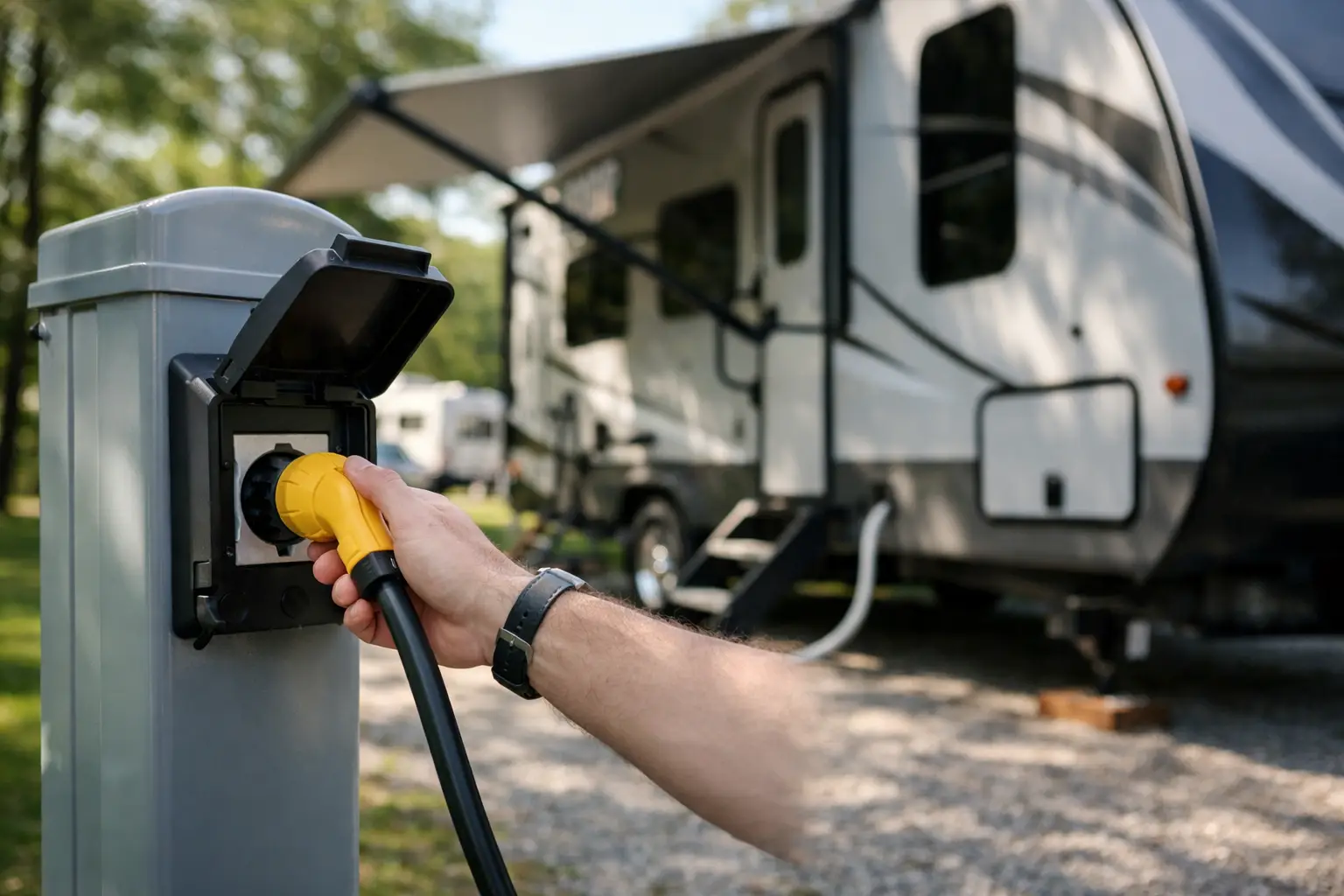
A late arrival should end with dinner, a shower, and a good night’s rest – not a tripped breaker or a hot power cord. This RV electrical hookup guide walks you through the simple checks that help protect your RV, your appliances, and everyone at the site. Whether you are stopping for one night off I-16 or settling in for a monthly stay, taking a few careful minutes at the pedestal is worth it.
Know Your RV Electrical Service Before You Plug In
The first question is simple: what service does your RV use? Most campers use either 30-amp or 50-amp shore power. They are not interchangeable, even though adapters can make the plugs physically fit.
A 30-amp RV service uses one 120-volt hot wire and can supply up to 3,600 watts. It is common on smaller travel trailers, pop-ups, and many motorhomes. A 50-amp RV service uses two 120-volt hot legs. It can provide much more available power, which is why it is common on larger fifth wheels and motorhomes with two air conditioners.
Look at your RV’s shore-power plug before you leave home. A 30-amp plug has three prongs and is usually marked TT-30. A 50-amp plug has four prongs and is larger. Knowing which one you need prevents a lot of guessing at check-in.
An adapter can let a 30-amp RV connect to a 50-amp pedestal outlet, or let a 50-amp RV connect to a 30-amp outlet. It does not create extra power. If a 50-amp RV is connected to 30-amp service, you still have only 30 amps available. Run too many high-draw appliances at once, and the pedestal breaker will trip.
Check the Pedestal Before Connecting
Park and level the RV first. Once you know where your cord will reach without stretching, take a close look at the electrical pedestal. You are looking for a clean, solid, undamaged connection point.
Keep the pedestal breaker in the OFF position before plugging in. Check the outlets for cracked covers, loose parts, burn marks, melted plastic, moisture, or signs that something has overheated. Do not use an outlet that looks damaged. Call the office or campground host and ask for help. A questionable outlet is not something to work around with tape, force, or an extra adapter.
Next, inspect your own shore-power cord. The plug blades should be straight and clean, the cord jacket should have no cuts or flattened spots, and the connector should not feel loose. A cord that has become hot in the past may show discoloration or a burnt smell. Replace damaged equipment before your next trip.
If you carry an electrical management system or surge protector, use it. These devices can check for common wiring problems and help guard against power surges, low voltage, and incorrect wiring. They are especially useful during busy travel periods, when many RVs may be running air conditioners at the same time.
RV Electrical Hookup Guide: The Right Order
Once the pedestal and your cord look good, make the connection in this order:
- Turn the pedestal breaker OFF.
- Plug your surge protector or electrical management system into the correct pedestal outlet, if you use one.
- Plug in your RV shore-power cord firmly. Do not force it.
- Make sure the connection is supported and the cord is not lying in standing water or stretched across a walkway.
- Turn the pedestal breaker ON.
- Check your RV’s power panel, monitor, or electrical management display before turning on major appliances.
This order matters. Plugging in with the breaker off reduces the chance of arcing at the connection. Arcing can damage the plug over time and can create heat where you do not want it.
After power is on, start small. Turn on interior lights, then check the refrigerator setting and outlets. If everything looks normal, you can begin using the RV as usual. There is no need to turn on both air conditioners, the microwave, and the electric water heater the second you arrive.
Manage Your Power, Especially on 30 Amps
The most common RV electrical problem is not bad campground power. It is asking a 30-amp connection to do more than it can handle.
Air conditioners, microwaves, coffee makers, space heaters, hair dryers, electric water heaters, and toaster ovens all draw a lot of power. On 30 amps, running the air conditioner and microwave together may trip the breaker. Add a space heater or water heater, and the odds go up fast.
A practical habit is to think about what is heating, cooling, or cooking at any given moment. If you need to use the microwave, turn the air conditioner fan down or switch the water heater to propane first. If you are using a portable heater on a chilly night, avoid running other high-draw appliances on that same service.
Fifty-amp service gives you more room, but it still has limits. A loose plug, low voltage, or overloaded pedestal can cause trouble on any size connection. If lights dim, an air conditioner struggles to start, or your electrical management system warns of low voltage, reduce your load and contact the campground office. Low voltage can be hard on compressor motors and other appliances.
Avoid Extension Cords and Extra Adapters
Your RV shore-power cord should reach the pedestal without an extension cord whenever possible. Long or undersized cords can cause voltage drop and heat buildup, especially when an air conditioner is running. If an extension is truly necessary, use a heavy-duty RV-rated cord designed for your service level and keep the connection dry and off the ground.
Adapters are handy, but every added connection is another possible weak point. Use only the adapter you need, make sure it is rated for the service, and check it occasionally for warmth. A plug that is warm after normal use deserves attention. A plug that is hot, discolored, or smells burnt should be disconnected safely by turning the breaker off first.
Never modify a plug, remove a grounding pin, or use a household-style adapter as a long-term solution. Those shortcuts can put your RV and your safety at risk.
What to Do if the Breaker Trips
If the pedestal breaker trips, do not keep resetting it without checking the cause. First, turn off high-draw appliances inside the RV. Reset the breaker once, then bring appliances back online one at a time.
If it trips again with only light loads running, the problem may be the pedestal, shore cord, adapter, or RV electrical system. Leave the breaker off and ask for assistance. If your electrical management system reports reverse polarity, an open ground, or another wiring fault, do not connect until the issue has been corrected.
A breaker that trips once after you started the microwave with the air conditioner running is usually a load issue. A breaker that trips repeatedly with little power in use is a reason to stop and investigate.
Set Up for a Comfortable Stay
After your electrical connection is secure, finish the rest of your arrival routine. Connect water and sewer according to site instructions, secure pets before opening slides or unloading, and keep cords and hoses arranged so nobody can trip over them. At night, a small flashlight makes it easier to see outlet labels and check that every connection is fully seated.
Before leaving, turn off major appliances, switch the pedestal breaker OFF, then unplug your RV. Coil the cord loosely and keep the plug end clean and dry for the next stop.
A dependable hookup is one of those quiet travel wins: you pull in, get connected, and settle down without fuss. At Rusty’s Retreat, the goal is to help make that kind of easy stop possible, so you can rest up and be ready for the road ahead.