
RV Hookup Questions to Ask Before You Pull In
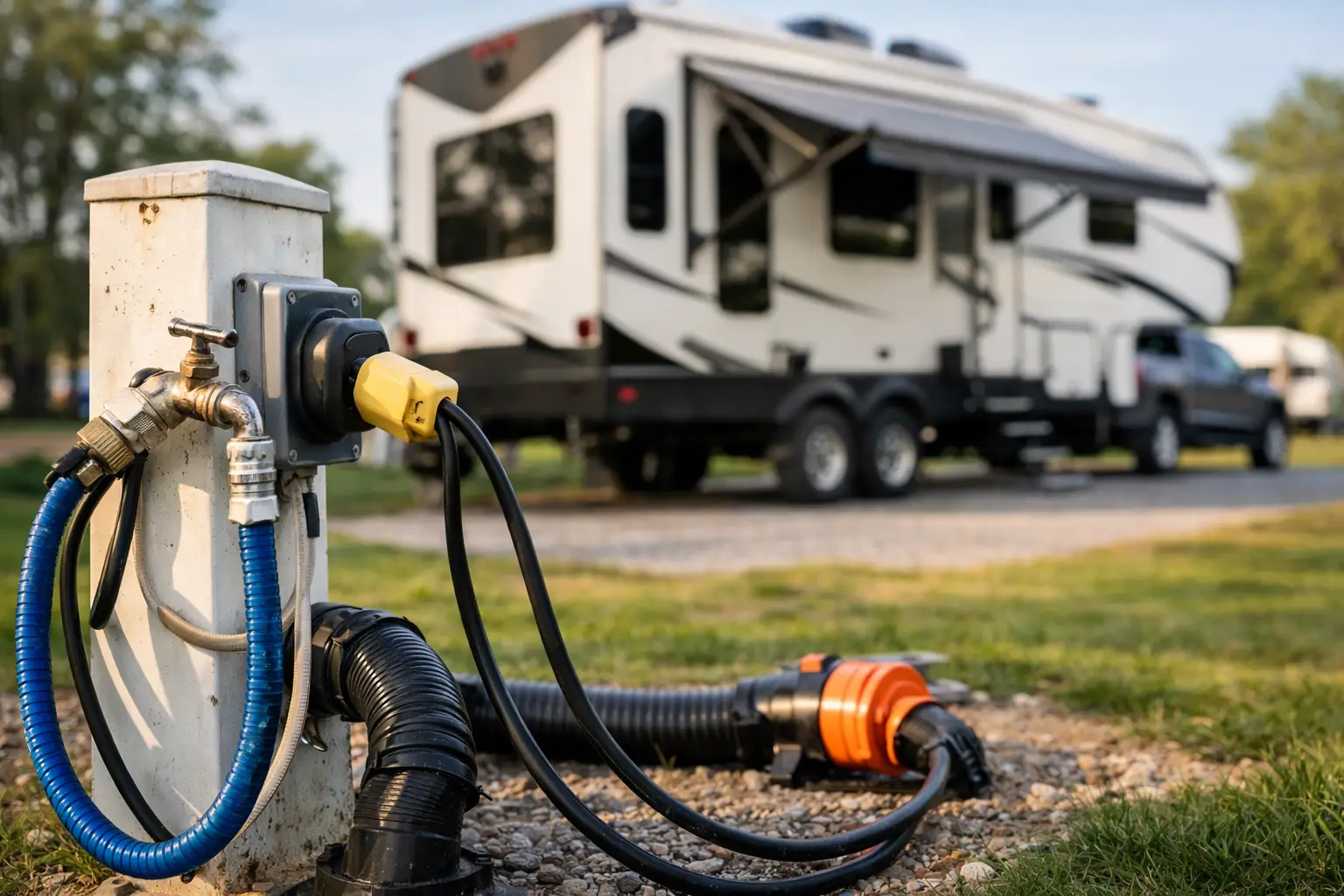
You have made it off the interstate, the kids are ready to get out, and your co-pilot has found a spot for the night. That is not the moment to learn the site has the wrong power outlet, a sewer connection you cannot reach, or rules that do not work for your stay. A few basic RV hookup questions before you pull in can save a lot of hassle after dark.
Whether you need one quiet night near I-16 or a monthly site in the Dublin, Georgia area, the best RV parks make the basics clear. Here is what to ask, why each answer matters, and what you should have ready before you connect.
Start With the Site and Your RV
Before talking about water, power, or sewer, make sure the site itself is a fit. Give the park your RV type, total length, and whether you are towing a vehicle or trailer. Total length matters more than the length printed on the side of the camper. A 30-foot travel trailer with a pickup can take up much more room than a 30-foot motorhome.
Ask whether the site is back-in or pull-through and whether there is room to park your tow vehicle. Pull-through sites are handy for a quick overnight stop, but a back-in site can work just fine when you are staying longer and have time to set up. If you have slide-outs, ask about clearance on both sides. Trees, utility pedestals, picnic areas, and neighboring sites can affect how much room you really have.
It also helps to ask about the ground. Is the pad level? Is it gravel, concrete, or grass? A little leveling is normal, but a heavily sloped site can turn a simple overnight stay into a longer setup job. If rain is expected, ask whether the site drains well. Nobody wants to step out into standing water the next morning.
Ask What Kind of Hookups Are Included
The phrase “full hookup” usually means electric, water, and sewer are available at the site. Still, it is smart to confirm. Some parks use the term differently, and some sites may have different utility arrangements.
Ask directly: Is water, sewer, and electric available at this specific site? If sewer is not at the site, ask whether there is a dump station and whether it is easy to access before leaving. That may be fine for a short overnight stay, but it can be inconvenient for a longer visit.
For monthly stays, clarify what is included in the site rate and what is billed separately. Electricity is often charged based on usage for extended-stay RV guests. Knowing that before arrival makes it easier to budget, especially during Georgia’s hot summer months when air conditioning runs more often.
RV Hookup Questions About Electricity
Electrical service is one of the first things to confirm because it affects what you can safely run inside your RV. Most sites offer 30-amp service, 50-amp service, or both. These are not interchangeable without the right adapter, and an adapter does not increase the amount of power available.
If your RV has a 30-amp plug, ask if 30-amp service is available. If you have a larger fifth wheel or motorhome with two air conditioners, you may need 50-amp service. A 50-amp connection provides substantially more capacity, which can make a real difference when using air conditioning, a microwave, water heater, and other appliances.
Ask whether the electrical pedestal is near the usual connection side and whether your power cord will reach. Carrying a quality extension cord rated for your RV service can be helpful, but it should be used correctly and only when needed. A cord that is too light-duty can overheat.
Before connecting, inspect the pedestal and your cord. If the outlet looks damaged, loose, burned, or unusually worn, let the office know. Plug in a surge protector or electrical management system first if you use one. These devices can help alert you to low voltage, high voltage, or wiring problems before they reach your RV’s electrical system.
Once connected, do not turn on every major appliance at once. On 30-amp service, running the air conditioner, microwave, hair dryer, and electric water heater together may trip the breaker. You can still be comfortable. You just need to manage the bigger loads one at a time.
Water Hookup Details That Matter
Ask whether the water connection is potable, meaning it is safe for drinking and cooking. At a properly maintained RV site, the city water connection is generally intended for normal RV use. Still, use a designated drinking-water hose, not the same hose you use to rinse sewer equipment or wash the camper.
A water pressure regulator is a small item that can prevent a larger problem. Water pressure varies from place to place, and too much pressure can stress RV plumbing, fittings, and appliances. Connect the regulator at the spigot, then attach your clean drinking-water hose.
You may also want a water filter, particularly if you are sensitive to taste or staying a while. It is optional for many overnight stops, but it can make a longer stay more pleasant. If temperatures may get near freezing, ask whether the park has any winter weather instructions. Even in south Georgia, an occasional cold snap can call for a little preparation.
When you arrive, turn the spigot on slowly and check your connections for leaks. A loose washer or cracked hose can waste water and leave a muddy patch around your site. If you find an issue with the park connection, call the office rather than trying to force or repair it yourself.
Sewer Hookup Questions for a Cleaner Setup
Sewer hookups are convenient, but they deserve a little care. Ask where the sewer inlet is located on the site and whether your hose will reach without stretching tightly across the ground. RV sewer connections are usually on the driver’s side, but site layouts are not all identical.
Bring a sewer hose with secure fittings and a support if you are staying more than a night or two. The support helps create a steady downhill path for draining. It also keeps the hose off the ground, which is cleaner and is required at some parks.
Keep your black tank valve closed until the tank is reasonably full, then empty it. Leaving the black valve open all the time can allow liquids to drain away while solids remain behind, creating a blockage inside the tank. After emptying the black tank, flush it if your RV has a built-in flush system, then empty the gray tank. The gray water helps rinse the hose after the black tank.
Never put wipes, paper towels, feminine products, grease, or food scraps down the RV toilet or drain, even if a package says it is flushable. RV plumbing and park sewer systems work best when you stick to RV-safe toilet paper and normal waste.
Questions to Ask for Overnight and Monthly RV Stays
An overnight stop and a month-long stay have different needs. For one night, you may care most about easy access, a safe place to rest, and hookups that work without a long setup. For a monthly site, details such as mail, laundry access, guest policies, pet rules, trash pickup, and electricity billing become more meaningful.
Ask about check-in hours and what to do if you arrive late. Road travel does not always run on schedule. A park with clear arrival instructions can take a lot of pressure off when traffic, weather, or a long fuel stop delays you.
If you are traveling with pets, ask about the pet fee, leash requirements, and where dogs can be walked. Pet-friendly does not mean there are no rules, and clear expectations help everyone enjoy a quieter stay. If you work from the road, ask about cell service in the area and whether there is Wi-Fi, but have a backup plan if your work depends on a strong connection.
At Rusty’s Retreat, full-hookup RV sites are set up for travelers who need a straightforward overnight stop as well as guests planning a longer stay. Calling ahead with your RV length, electrical needs, and expected arrival time is the quickest way to make sure the site fits your plans.
What to Have Ready Before You Connect
Most hookup trouble comes from a missing part, not a difficult process. Keep your hookup equipment together in one storage bin so you can set up without searching through every outside compartment. Your basics should include a drinking-water hose, water pressure regulator, sewer hose with fittings, disposable gloves, electrical adapter if needed, surge protector, leveling blocks, and a flashlight for late arrivals.
When you reach the site, park first and check where each utility connection sits before unhooking your tow vehicle or putting out the slides. Then connect power, test it, connect water, and set up sewer. Take a quick walk around the RV before settling in. Look for drips, loose connections, cords in a tripping path, or a sewer hose that needs better support.
A five-minute phone call and a careful setup give you more time for the part that matters: getting parked, getting comfortable, and enjoying a quiet place to rest before the next mile.