
What Does RV Electricity Cost Per Month?
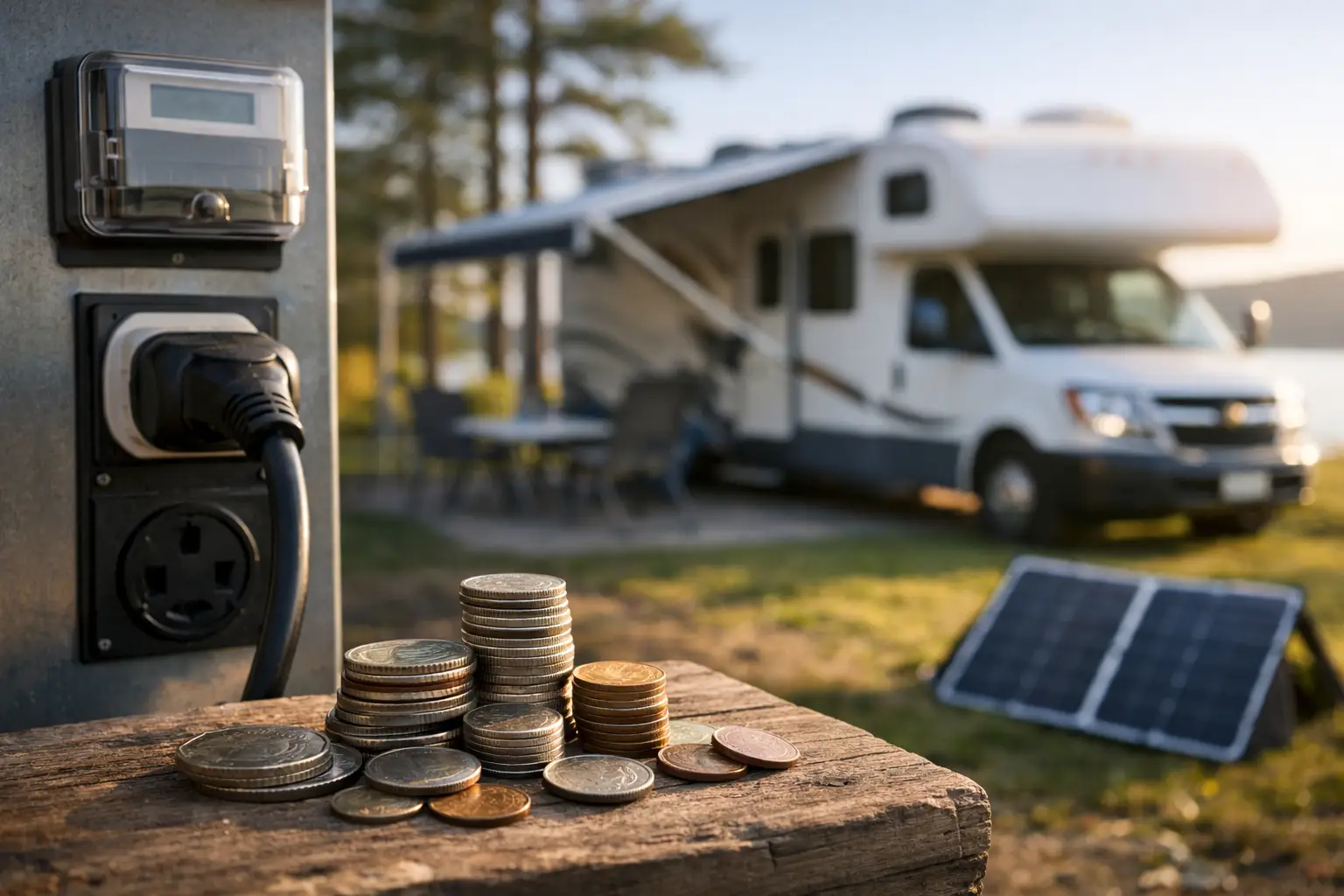
A monthly RV site can look like a simple, low-cost place to settle in – until the first electric bill arrives. So, what does RV electricity cost? For most extended-stay RV guests, it depends on how much power the rig uses, local utility pricing, the weather, and whether the park bills electricity separately from the site rent.
A light-use month may add only a modest amount to your site cost. A hot Georgia summer month with the air conditioner running hard can look very different. The good news is that RV electricity is easy to understand once you know what is being measured and which appliances are doing the work.
How RV electricity billing usually works
Electricity is measured in kilowatt-hours, often written as kWh. One kilowatt-hour means using 1,000 watts of power for one hour. Your RV site meter records the power used during your stay, and the charge is typically calculated by multiplying the kWh used by the local electric rate.
For example, if you use 600 kWh in a month and the billed rate is 15 cents per kWh, your electricity charge would be $90. Some locations may also include a small billing, meter, or utility fee. Others roll electricity into the monthly rate, usually with reasonable-use limits. There is no one nationwide RV electricity price, so it is always smart to ask how a particular park handles the bill.
At an extended-stay site, the monthly rate and the electric bill are often separate. That arrangement keeps the base site rate fair for guests with different needs. A couple who is away working all day and uses little power should not have to cover the cost of someone running multiple air conditioners around the clock.
What does RV electricity cost in a typical month?
A practical range for many RVers is about $40 to $200 per month for electricity, though it can fall below or rise above that range. Mild weather, limited time in the RV, and careful appliance use can keep costs lower. Heavy air conditioning, electric heat, a large fifth wheel, or full-time work from the RV can push the bill higher.
Many RVs use roughly 250 to 900 kWh per month. At an electricity rate of 12 to 18 cents per kWh, that works out to about $30 to $160 before any added fees. In real life, a summer bill of $150 to $250 is possible for a larger RV in the South if one or two air conditioners run most of the day.
These are planning numbers, not a promise of a particular bill. Utility rates vary by area, and a park may pass through its actual cost of electricity. The size and condition of your RV matter just as much as the rate on the bill.
Low-use RV electricity: about $40 to $80 a month
This range is common during comfortable spring or fall weather. You may be using lights, a refrigerator, a microwave, television, phone chargers, and an occasional coffee maker, but not relying heavily on air conditioning or electric heat.
A smaller, well-insulated camper can do especially well in mild weather. If you spend part of the day out visiting family, working, or traveling, your power use may stay near the lower end too.
Average full-time use: about $80 to $150 a month
A typical extended-stay guest often lands here. The RV is occupied daily, the refrigerator stays on, meals are prepared inside, electronics are charged, and the air conditioner or furnace may run some days.
For many travelers and mobile workers, this is a reasonable amount to budget beyond monthly site rent. It leaves room for everyday comfort without assuming constant heating or cooling.
Heavy-use months: $150 to $250 or more
Summer heat is the biggest reason RV electric bills climb in Georgia. Air conditioners pull a substantial amount of power, especially when the sun is on the RV all afternoon or the unit has to fight hot, humid air day after day.
Winter can also be expensive if you heat mainly with portable electric heaters. They are convenient, but they use a lot of power when run for hours. A large RV with two AC units, several people inside, frequent cooking, and a work-from-home setup may naturally use more electricity than a smaller rig occupied by one person.
The appliances that raise an RV power bill
Your refrigerator uses power all day, but it is usually not the biggest cost. Heating and cooling are the real drivers. An RV air conditioner can use roughly 1,200 to 1,800 watts while running, and some larger units use more. If it runs for many hours, the kWh add up fast.
Electric space heaters are another major source of usage. A common 1,500-watt heater running for eight hours uses 12 kWh in a day. At 15 cents per kWh, that is $1.80 per day for one heater. Run it every day for a month, and it can add more than $50 to the bill.
Other appliances worth watching include electric water heaters, clothes dryers, residential-style refrigerators, dishwashers, air fryers, and electric griddles. None of these are automatically a problem. The key is understanding that several high-draw appliances used at the same time can increase both your monthly cost and the load on your RV electrical system.
Weather changes the math
In Dublin, Georgia, a shaded site and a few small habits can make a real difference in warm months. Close blinds on the sunny side of the RV, keep window seals in good shape, and avoid setting the thermostat extremely low. Setting the AC at 72 degrees when it is 96 outside may keep the unit working almost nonstop. A setting closer to 76 or 78, along with a fan, is often more manageable and still comfortable.
Humidity matters, too. An air conditioner removes moisture while cooling, which is useful in the South but adds to its workload. Keep doors and windows closed while the AC is running, clean or replace filters as needed, and make sure the outside condenser area is not blocked by leaves, storage items, or a cover.
During cold snaps, use propane heat when it makes sense for your RV and your budget. Many RV furnaces use propane for heat while drawing a smaller amount of electricity for the fan. That can reduce the electric bill, although it means you will need to account for propane costs separately.
How to estimate your own RV electricity cost
You do not need to be an electrician to get a close estimate. Start by checking the wattage on an appliance label, then multiply watts by the number of hours it runs. Divide that number by 1,000 to get kWh. Finally, multiply kWh by your site’s electric rate.
Say a 1,500-watt space heater runs six hours per day. That is 9 kWh a day, or about 270 kWh in a 30-day month. At 15 cents per kWh, that heater alone costs about $40.50 for the month.
Air conditioners are harder to predict because they cycle on and off. Still, the same idea applies. If an AC averages 1,400 watts and runs the equivalent of eight hours per day, it uses about 336 kWh per month. At 15 cents per kWh, that is just over $50 from the AC alone.
The most accurate method is simply to check your meter reading at move-in and again after a week. Multiply that first week’s use by four for a rough monthly estimate. It will not account perfectly for changing weather, but it gives you a useful early warning before the month is over.
Questions to ask before booking a monthly RV site
Clear answers upfront make it easier to plan your stay. Before you commit to a monthly site, ask whether electricity is included in rent or billed separately, what the current per-kWh rate is, whether there are added fees, and when the electric bill is due.
It also helps to ask whether the site offers 30-amp or 50-amp service. The amperage does not directly determine what you pay, because you pay for energy used rather than available capacity. But 50-amp service supports larger RVs and more appliances, which can make higher usage possible.
At Rusty’s Retreat, monthly RV guests have full hookups and can enjoy a quiet place to stop, stay, and unwind close to I-16. If you are planning an extended stay, a quick direct call is the easiest way to confirm current site availability, monthly pricing, and how electricity is handled.
A comfortable stay does not have to mean a surprise bill
Most RV electric bills come down to heating and cooling, not the everyday items that make the RV feel like home. Use your AC and heat wisely, check your meter early, and ask for the billing details before you settle in. That small bit of planning lets you enjoy a restful site, keep your budget steady, and spend less time worrying about the next utility charge.